

Cash Flow vs Profit: The Small Business Difference Owners Must Understand
John Martinez stared at his accounting software in disbelief. The profit and loss statement showed his construction company had earned $45,000 in the last quarter—a record-breaking performance that should have filled him with pride and excitement. Yet as he opened his bank account online, the reality hit him like a sledgehammer: his checking account balance was negative $12,000.
The irony was crushing. On paper, John was a success—he had profitable operations, growing revenue, and expanding market share. In reality, he couldn’t pay his workers, couldn’t afford the materials for tomorrow’s job, and couldn’t even cover his business loan payment that was due in three days. As he sat in his office at 2 AM, calling suppliers to beg for extended payment terms while his wife slept fitfully upstairs wondering if they’d lose their home, John realized he had been living a dangerous financial fantasy. He understood profit, but he had completely ignored cash flow—and now his business and family were paying the price.
This story plays out thousands of times every day as small business owners discover that the difference between profit and cash flow isn’t just an accounting nuance—it’s the difference between business survival and failure, between dreams fulfilled and aspirations shattered.
The Emotional Landscape of Financial Misunderstanding
The journey from entrepreneurial enthusiasm to financial crisis is often paved with good intentions and dangerous misconceptions. Many business owners, like John, become intoxicated by profit numbers that seem to validate their hard work and business acumen. They see rising revenues and growing profits and feel the emotional high of success, not realizing that these numbers exist in a different dimension from the cash that flows in and out of their bank accounts.
The emotional impact of confusing profit with cash flow extends far beyond business operations. It affects families, relationships, and personal well-being. When business owners realize their mistake, they often experience a complex mix of emotions: shame for not understanding basic financial principles, anger at themselves for the oversight, fear about the future, and guilt toward employees, suppliers, and family members who depend on the business.
Consider Sarah Chen, a boutique clothing retailer who celebrated reaching profitability in her second year. She invested heavily in new inventory, hired additional staff, and expanded to a larger store based on her impressive profit figures. Then came October—typically a slow month for retail—and she found herself unable to pay rent, payroll, and supplier invoices. The stress manifested in sleepless nights, strained relationships with her business partner, and the devastating realization that she might have to lay off employees she had come to think of as family. The emotional toll of watching her dream crumble due to a fundamental misunderstanding of business finance created lasting trauma that affected her confidence in future business ventures.
Understanding the Fundamentals: Profit vs. Cash Flow Defined
Profit: The Accounting Fiction
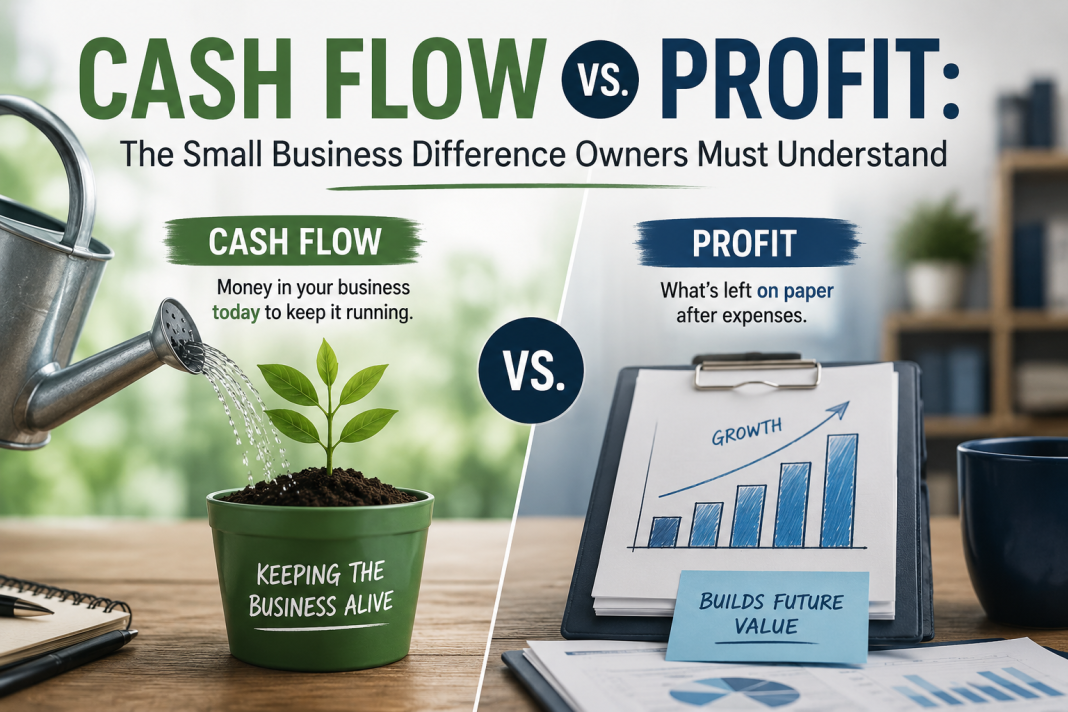
Profit represents the theoretical gain your business achieves after subtracting expenses from revenue. It’s calculated using accounting principles that recognize revenue when earned and expenses when incurred, regardless of when actual cash changes hands. This accrual basis accounting provides valuable insights into business performance, but it exists in a world separate from the immediate demands of your bank account.
Think of profit as your business’s academic report card—it tells you how well you’re performing over time, but it doesn’t necessarily reflect your current financial condition. You can have excellent grades on paper while struggling with immediate financial challenges.
Cash Flow: The Real-World Reality
Cash flow represents the actual movement of money in and out of your business. It’s tangible, immediate, and unforgiving. Cash flow doesn’t care about your profit margins, your growth projections, or your accounting methods. It only cares about whether money is actually flowing into your account when you need it to pay bills, employees, and suppliers.
Cash flow is the heartbeat of your business—the rhythm that determines whether you live or die. It’s immediate, visceral, and emotionally charged because it directly impacts your ability to meet obligations and maintain operations.
The Dangerous Dance: When Profit and Cash Flow Move in Opposite Directions
The most perilous situation occurs when businesses appear profitable while experiencing negative cash flow. This contradiction creates a false sense of security that can lead to catastrophic decisions.
The Construction Industry Trap
John’s story exemplifies a common scenario in construction and other industries where payment terms create significant timing gaps. Contractors often pay for materials and labor upfront but wait 30, 60, or even 90 days to receive payment from clients. During this period, they may show healthy profits on paper while their bank accounts dwindle.
Imagine the emotional rollercoaster: John completes a $100,000 project, earning a $25,000 profit. His books look fantastic, and he feels justified in taking on additional projects and hiring more workers. Meanwhile, he’s paid $75,000 for materials and labor, but won’t receive payment for 60 days. His cash flow shows a $75,000 outflow with no corresponding inflow, creating a dangerous gap that grows with each project.
The Retail Expansion Nightmare
Sarah’s retail expansion illustrates another common trap. She saw her profit margins improving and felt confident expanding inventory and hiring staff. However, her customers paid immediately, but she had to pay suppliers 30 days earlier. As inventory levels increased, more cash became tied up in unsold merchandise while her fixed expenses (rent, payroll, utilities) continued to drain her account.
The emotional impact was devastating. Sarah watched beautiful inventory sit unsold while suppliers demanded payment and employees expected their wages. The disconnect between her profitable appearance and cash-strapped reality created a daily cycle of anxiety and stress that affected every aspect of her life.
Industry-Specific Cash Flow Challenges: Where Dreams Meet Reality
Different industries face unique challenges in managing the profit versus cash flow relationship. Understanding these industry-specific dynamics can help business owners prepare for and mitigate potential problems.
Service Industries: The Invoice-to-Payment Gap
Professional services, consulting firms, and similar businesses often face the longest payment cycles. They provide services immediately but may wait weeks or months for payment while continuing to incur expenses.
David Kim, a marketing consultant, experienced this challenge firsthand. He worked intensively on a major campaign, billing $80,000 upon completion. His profit calculation showed a substantial gain, but his cash flow was severely impacted as he waited 45 days for payment while maintaining his team and covering overhead expenses. The stress of managing cash flow during this period led to difficult decisions about which expenses to delay and which vendors to prioritize.
Manufacturing: The Inventory Investment Dilemma
Manufacturers face complex cash flow challenges involving raw materials, work-in-progress inventory, and finished goods. They often invest significant cash in inventory that may not generate revenue for weeks or months.
Elena Rodriguez operated a small furniture manufacturing business. She invested in premium wood and materials to fulfill a large order, showing healthy profits on paper as the furniture was completed. However, the customer requested a 90-day payment term, leaving Elena with substantial cash outlays and delayed revenue recognition. The emotional stress of managing cash flow during this extended period forced her to take out high-interest loans to cover operational expenses.
Restaurant and Food Service: The Daily Cash Cycle
Restaurants operate on thin margins with daily cash flow requirements. They often pay suppliers weekly while collecting daily revenue, creating complex cash management challenges.
Tommy Nguyen’s restaurant showed consistent monthly profits, but the daily cash flow management was exhausting. He paid suppliers weekly, payroll bi-weekly, and rent monthly while collecting daily revenue that varied significantly. The emotional toll of constantly monitoring cash flow and making daily decisions about which expenses to prioritize affected his ability to focus on improving the business.
The Emotional Impact: Beyond Numbers to Human Consequences
The confusion between profit and cash flow doesn’t just affect business operations—it creates profound emotional and psychological consequences that ripple through every aspect of a business owner’s life.
Stress and Health Implications
Constant cash flow anxiety can lead to serious health problems. Business owners who mistake profit for cash flow often find themselves in a perpetual state of financial stress, leading to sleep disorders, anxiety, depression, and physical health issues.
The stress of managing cash flow crises creates a vicious cycle: stress impairs decision-making abilities, leading to poor financial choices that worsen cash flow problems, which increases stress levels. Many business owners report experiencing physical symptoms like headaches, stomach problems, and sleeplessness during cash flow crises.
Relationship Strain
Financial stress inevitably affects personal relationships. Spouses, partners, and family members often bear the brunt of business cash flow problems, especially when business decisions impact household finances.
Consider the story of Lisa Thompson, who owned a successful landscaping business with her husband. When cash flow problems emerged due to the profit/cash flow confusion, their relationship deteriorated under the strain. Arguments about money became frequent, trust eroded, and their marriage nearly ended as they struggled with the emotional toll of business financial stress.
Employee Impact
Employees often become collateral damage in cash flow crises. When business owners realize their profit numbers don’t translate to available cash, they may face difficult decisions about payroll, benefits, and job security.
The emotional impact on employees is significant. Workers who trusted their employer’s stability may face delayed payments, reduced hours, or layoffs. The guilt and stress of having to make these decisions affects business owners deeply, especially those who view their employees as extended family.
Warning Signs: Recognizing the Profit-Cash Flow Disconnect
Understanding the warning signs can help business owners identify potential problems before they become crises.
Red Flags in Financial Statements
High Accounts Receivable: Large amounts of money owed by customers indicates cash flow timing issues.
Growing Inventory Levels: Increasing inventory without corresponding sales growth ties up cash unnecessarily.
Consistent Profit with Declining Bank Balances: This is the classic sign of the profit/cash flow disconnect.
Frequent Short-Term Borrowing: Regular use of credit cards or lines of credit to cover operational expenses.
Behavioral Warning Signs
Chronic Payment Delays: Consistently paying bills late or negotiating extended payment terms.
Stress-Related Symptoms: Sleep problems, anxiety, irritability related to financial concerns.
Avoiding Financial Reviews: Reluctance to check bank balances or review cash flow statements.
Overconfidence in Profit Numbers: Dismissing cash flow concerns because of strong profit performance.
The Path Forward: Mastering Both Profit and Cash Flow
Understanding the difference between profit and cash flow isn’t just about avoiding problems—it’s about creating sustainable business success that brings emotional satisfaction and peace of mind.
Building Cash Flow Awareness
Develop systems and habits that keep cash flow visible and manageable:
Daily Cash Flow Monitoring: Check your bank balance daily and understand upcoming cash needs.
Weekly Cash Flow Forecasting: Project cash needs for the next 30-60 days to identify potential shortfalls.
Monthly Cash Flow Analysis: Review actual versus projected cash flow to improve forecasting accuracy.
Practical Cash Flow Management Strategies
Invoice Promptly: Send invoices immediately upon completing work or delivering products.
Offer Early Payment Discounts: Encourage faster payments by offering small discounts for prompt payment.
Negotiate Better Terms: Work with suppliers to extend payment terms while collecting from customers promptly.
Maintain Cash Reserves: Build an emergency fund equivalent to 3-6 months of operating expenses.
Monitor Payment Patterns: Track customer payment behavior and adjust credit terms accordingly.
Balancing Profit and Cash Flow Focus
Successful business owners develop the ability to focus on both profit and cash flow simultaneously:
Profit Planning: Develop strategies to improve profitability while considering cash flow implications.
Cash Flow Optimization: Identify opportunities to improve cash flow without sacrificing long-term profitability.
Integrated Decision Making: Consider both profit and cash flow impacts when making business decisions.
The Transformation: From Crisis to Confidence
The business owners who survive and thrive are those who learn to master both profit and cash flow management. This transformation often involves emotional growth as much as financial learning.
Learning from Crisis
Many business owners report that their cash flow crises, while traumatic, ultimately made them better entrepreneurs. The harsh lessons learned from confusing profit with cash flow created lasting changes in their approach to business management.
John Martinez, after his near-bankruptcy experience, developed a comprehensive cash flow management system that made his business more resilient and profitable. The emotional scars of his crisis motivated him to become an advocate for cash flow education, helping other business owners avoid similar mistakes.
Building Sustainable Success
Businesses that master both profit and cash flow management experience emotional benefits that extend beyond financial stability:
Reduced Stress: Knowing that cash flow is under control reduces anxiety and improves decision-making.
Increased Confidence: Understanding the true financial condition of the business builds confidence in strategic planning.
Better Relationships: Stable cash flow reduces financial stress on personal relationships and employee morale.
Sustainable Growth: Proper cash flow management enables planned growth rather than crisis-driven decisions.
Industry Best Practices: Learning from Success Stories
Construction Industry Solutions
Construction companies that successfully manage cash flow often implement:
Progress Billing: Billing based on work completion rather than upon final project delivery.
Material Handling: Arranging for suppliers to deliver materials only as needed rather than upfront.
Retainage Management: Negotiating better terms for retainage held by clients.
Subcontractor Coordination: Aligning subcontractor payment schedules with client payment terms.
Retail Industry Approaches
Successful retailers often focus on:
Inventory Turnover: Maintaining optimal inventory levels to balance availability with cash flow.
Seasonal Planning: Preparing for seasonal fluctuations in both revenue and cash flow.
Supplier Relationships: Building strong relationships that provide favorable payment terms.
Customer Credit Management: Careful management of credit terms to optimize cash flow timing.
Professional Services Excellence
Service businesses that excel at cash flow management often:
Require Deposits: Collect deposits or retainer fees before beginning work.
Implement Payment Plans: Structure payments to align with service delivery.
Monitor Collections: Actively manage accounts receivable aging and collection processes.
Plan Capacity: Balance growth ambitions with cash flow capacity.
The Technology Advantage: Tools for Modern Cash Flow Management
Modern technology offers powerful tools to help business owners manage both profit and cash flow effectively:
Cloud-Based Accounting Systems
Advanced accounting software can provide real-time visibility into both profit and cash flow, with features like:
Automated Cash Flow Forecasting: Predicting future cash needs based on historical patterns and current commitments.
Integration Capabilities: Connecting with banking, payment processing, and other business systems for comprehensive visibility.
Alert Systems: Automatically notifying business owners of potential cash flow issues.
Mobile Access: Providing cash flow information anywhere, anytime for immediate decision-making.
Payment Processing Solutions
Modern payment systems can improve cash flow by:
Accelerating Collections: Enabling immediate payment through various channels.
Automated Invoicing: Streamlining the billing process to ensure timely invoicing.
Recurring Payment Options: Facilitating regular payments for ongoing services.
Multi-Channel Acceptance: Accepting payments through various methods to accommodate customer preferences.
The Emotional Intelligence Component: Understanding Financial Psychology
Managing the profit versus cash flow relationship requires not just technical skills but emotional intelligence and psychological awareness:
Overcoming Confirmation Bias
Business owners often focus on positive indicators (profit) while ignoring warning signs (cash flow problems). Developing awareness of this bias helps create more balanced financial decision-making.
Managing Financial Anxiety
Learning to distinguish between temporary cash flow fluctuations and structural problems helps reduce unnecessary stress while maintaining appropriate vigilance.
Building Financial Confidence
Confidence comes from understanding both profit and cash flow dynamics, enabling business owners to make informed decisions with reduced anxiety.
Case Study: The Complete Transformation
Let’s examine how Maria Santos transformed her bakery from a cash flow crisis to a thriving business that exemplifies proper profit and cash flow management.
The Crisis Point
Maria’s bakery was profitable on paper, with strong revenue growth and healthy margins. However, she faced a cash flow crisis when a large commercial client delayed payment for two months while she continued to pay daily expenses. The stress was overwhelming—she couldn’t sleep, her relationship with her business partner became strained, and she considered closing the business entirely.
The Awakening
The crisis forced Maria to understand the difference between profit and cash flow. She realized that her beautiful profit numbers meant nothing when she couldn’t pay her employees or buy ingredients for the next day’s baking.
The Solution Implementation
Maria implemented several key changes:
Cash Flow Forecasting: Weekly projections of cash needs and availability.
Payment Term Negotiation: Better terms with suppliers and prompt payment incentives for customers.
Inventory Management: Just-in-time ordering to reduce cash tied up in inventory.
Diversified Revenue: Multiple revenue streams to smooth cash flow variations.
The Transformation Results
Within six months, Maria’s bakery achieved both profitability and positive cash flow. The emotional relief was profound—she could sleep peacefully, her relationship with her partner improved, and she gained confidence in her business management abilities. The bakery grew steadily, and Maria became an advocate for cash flow education in her local business community.
Preventive Measures: Building Long-Term Financial Health
Regular Financial Reviews
Schedule monthly reviews that examine both profit and cash flow metrics:
Profit Analysis: Understanding what drives profitability and how to improve it.
Cash Flow Assessment: Evaluating cash flow patterns and identifying improvement opportunities.
Forecasting: Projecting future financial performance under various scenarios.
Professional Support Systems
Build relationships with professionals who can provide guidance:
Accountants: Who understand both profit and cash flow management.
Bankers: Who can provide financing solutions when needed.
Business Advisors: Who offer strategic guidance for sustainable growth.
Continuous Education
Stay current with best practices in financial management:
Industry Publications: Regular reading of business and financial publications.
Professional Development: Attending workshops and seminars on financial management.
Peer Networks: Connecting with other business owners to share experiences and insights.
The Ripple Effect: Impact on Employees, Suppliers, and Community
Proper cash flow management doesn’t just benefit the business owner—it creates positive ripple effects throughout the business ecosystem:
Employee Security and Satisfaction
When businesses maintain healthy cash flow, employees experience:
Job Security: Reduced anxiety about layoffs or delayed payments.
Benefits Stability: Consistent access to health insurance, retirement contributions, and other benefits.
Growth Opportunities: Investment in training, development, and career advancement.
Supplier Relationships
Healthy cash flow enables:
Timely Payments: Building trust and strong relationships with suppliers.
Better Terms: Negotiating favorable payment terms and discounts.
Reliability: Becoming a preferred customer who suppliers want to work with.
Community Impact
Well-managed businesses contribute to:
Economic Stability: Providing jobs and supporting local suppliers.
Tax Revenue: Contributing to local government services and infrastructure.
Community Development: Supporting local initiatives and charitable causes.
The Future: Sustainable Business Success
Businesses that master both profit and cash flow management position themselves for sustainable long-term success:
Growth Planning
With proper financial management, businesses can plan growth that’s sustainable rather than crisis-driven:
Strategic Expansion: Growth based on solid financial foundations rather than hope.
Market Opportunities: Ability to capitalize on opportunities when they arise.
Risk Management: Preparedness for economic downturns and unexpected challenges.
Personal Fulfillment
Success in financial management contributes to:
Personal Wealth: Building wealth through business ownership.
Family Security: Providing financial security for families and dependents.
Legacy Building: Creating businesses that can be passed on to future generations.
Conclusion: The Foundation of Business Success
The difference between profit and cash flow isn’t just an accounting concept—it’s the foundation of business success and personal well-being. Business owners who understand and manage both profit and cash flow create businesses that not only survive but thrive, providing security for employees, value for customers, and satisfaction for owners.
The emotional journey from confusion to mastery is challenging but ultimately rewarding. Business owners who learn to balance profit and cash flow management gain not just financial success, but peace of mind, reduced stress, and confidence in their ability to navigate whatever challenges the business world presents.
Remember: Profit tells you how well you’re doing over time; cash flow tells you whether you can survive today. Both matter, but cash flow is the heartbeat that keeps your business alive. Master both, and you’ll build not just a profitable business, but a sustainable one that brings joy, security, and fulfillment to you and everyone whose lives it touches.
The stories of John, Sarah, David, Elena, Tommy, Lisa, and Maria remind us that behind every financial decision is a human story of hopes, dreams, fears, and aspirations. Understanding the profit versus cash flow relationship isn’t just about business success—it’s about creating the conditions for human flourishing in all its forms. Take this lesson to heart, implement the strategies discussed, and transform your business from a source of stress into a source of strength and security.

