

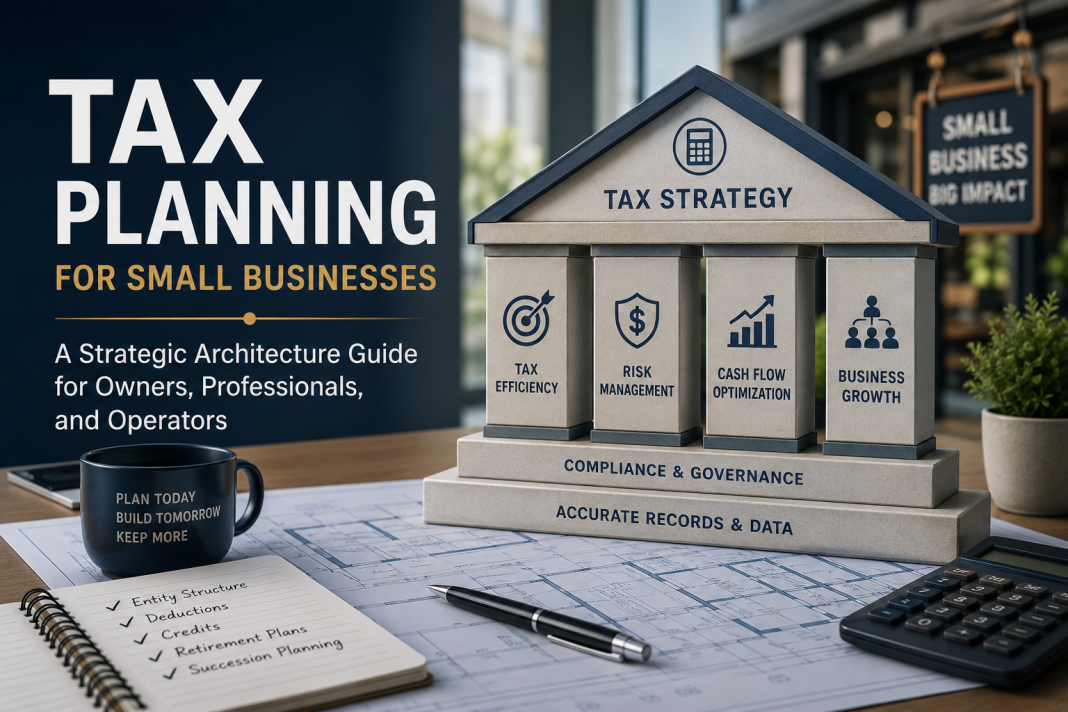
Year-end is rarely just a calendar boundary. For small businesses, it is a strategic inflection point where operational reality, financial architecture, and tax liability converge. Too often, owners treat the final quarter as a compliance sprint: reconcile accounts, hand documents to an accountant, and file. This reactive posture leaves millions in deferred tax optimization, missed credits, and unmitigated audit risk on the table.
Modern tax planning is not about aggressive minimization. It is about tax-aware operational architecture—designing records, timing, and structures so that compliance becomes a byproduct of strategic clarity. The foundation of that architecture is record review. What you choose to examine, how you classify it, and when you act on it before December 31 (or your fiscal year-end) determines whether taxes are a cost center or a controlled variable.
This guide dissects the records small businesses must review before year-end, translates them into actionable strategies, and grounds them in real-world scenarios across jurisdictions. It is built for founders, operators, and tax professionals who want to move from retrospective filing to prospective design.
Part I: The Philosophical Shift—From Filing to Architecture
Tax strategy begins long before the return is prepared. It begins when an invoice is issued, a contract is signed, a worker is classified, or an asset is purchased. In 2026, the global compliance landscape has shifted toward real-time reporting, digital transaction visibility, and cross-border transparency (OECD BEPS 2.0, e-invoicing mandates, economic nexus thresholds). In this environment, data hygiene is tax strategy.
A well-kept ledger does more than satisfy authorities. It:
- Reveals timing arbitrage opportunities (defer income, accelerate deductions)
- Surfaces eligibility for credits, allowances, and zone-based incentives
- Exposes structural inefficiencies (entity misalignment, contractor misclassification, lease accounting mismatches)
- Creates audit resilience through documentation trails
The year-end record review is not an administrative chore. It is a strategic audit of your business’s tax posture.
Part II: The Core Ledger Audit—8 Record Categories to Review
1. Revenue & Receivables: Timing is Taxable Income
What to review: Unbilled revenue, deferred income, bad debt reserves, subscription vs. project-based recognition, customer prepayments.
Why it matters: Revenue recognition timing directly impacts taxable income, VAT/GST liability, and cash flow. Misaligned recognition can trigger phantom tax liabilities or missed deferral windows.
Strategic action:
- Under cash accounting, consider delaying invoicing for completed work until after year-end if cash flow permits.
- Under accrual accounting, evaluate whether contract milestones can be structured to align with tax periods.
- Establish or adjust bad debt reserves where collectibility is doubtful (jurisdiction-dependent).
- For subscription models, review annual prepayments vs. monthly billing to manage VAT/GST point-of-taxation rules.
Scenario: A UK-based SaaS firm notices 60% of clients opt for annual upfront payments. By shifting renewal communications to January and offering a 3% discount for quarterly billing starting Q1, the company defers £180k of revenue recognition, smoothing VAT remittances and reducing Q4 taxable profit without sacrificing cash flow.
2. Operating Expenses & Prepayments: The Acceleration Lever
What to review: Recurring expenses, prepaid services, professional fees, marketing spend, R&D, travel, home office allocations, vehicle logs.
Why it matters: Deductible expenses reduce taxable income, but their timing and classification dictate whether you capture immediate relief or spread benefits over years.
Strategic action:
- Accelerate deductible expenses before year-end (software licenses, insurance, maintenance, consulting retainers).
- Prepay eligible services where allowed (subject to 12-month rule equivalents).
- Separate capital expenditures from repairs/maintenance to avoid disallowed depreciation claims.
- Document R&D activities rigorously; many jurisdictions offer refundable credits or enhanced deductions.
Scenario: A Canadian artisanal bakery purchases a $45k commercial oven in November. By timing delivery and installation before year-end, the owner claims an accelerated capital allowance under the enhanced depreciation regime, reducing taxable income by ~$22k in Year 1 while preserving cash flow through financing.
3. Payroll, Contractors & Workforce Architecture
What to review: Employee vs. contractor classifications, bonus timing, pension/retirement contributions, fringe benefits, gig/platform payments, international remote workers.
Why it matters: Misclassification triggers penalties, back taxes, and benefit liabilities. Payroll timing and retirement contributions are among the most reliable deduction levers.
Strategic action:
- Audit contractor agreements against local control tests (UK IR35 equivalents, Australia’s contractor guidelines, EU platform worker directives).
- Shift discretionary bonuses to January if cash flow or profit targets are uncertain.
- Maximize employer retirement/pension contributions before year-end (often deductible at higher rates than individual contributions).
- Track remote worker locations to avoid unintentional payroll nexus or permanent establishment risk.
Scenario: An Australian digital agency engages three overseas freelancers. A year-end audit reveals two meet employee criteria under local guidelines. The firm restructures contracts, registers for compliant payroll withholding, and captures deductible superannuation contributions while avoiding future compliance penalties.
4. Inventory & Cost of Goods Sold (COGS): Valuation as Strategy
What to review: Stock levels, obsolescence, shrinkage, valuation method (FIFO, weighted average, specific identification), write-downs, consignment inventory.
Why it matters: Overstated inventory inflates profit and taxes; understated inventory triggers audit flags. Proper valuation and write-downs align tax liability with economic reality.
Strategic action:
- Conduct a physical count and reconcile with ledger.
- Write down obsolete, damaged, or slow-moving inventory before year-end (document with photos, aging reports, market data).
- Review valuation method consistency; switching methods often requires authority approval.
- For manufacturers, track work-in-progress to avoid premature expense recognition.
Scenario: A German electronics distributor identifies €90k of legacy components rendered obsolete by new EU energy efficiency standards. A documented write-down reduces taxable profit, frees up balance sheet space, and aligns tax reporting with actual market value.
5. Capital Assets & Depreciation Schedules
What to review: Asset registers, acquisition dates, depreciation methods, bonus depreciation availability, disposed/sold assets, like-kind exchanges (where applicable), green/tech transition assets.
Why it matters: Capital assets offer multi-year tax relief, but timing, classification, and disposition planning determine whether you capture accelerated relief or trigger recapture taxes.
Strategic action:
- Align purchases with year-end to claim current-year allowances or bonus depreciation.
- Review asset disposals: losses may offset gains; recapture rules vary by jurisdiction.
- Track green energy, EV, or efficiency assets for jurisdiction-specific credits.
- Maintain detailed registers (cost, date, method, accumulated depreciation) to prevent schedule drift.
Scenario: A US solar installer purchases mounting equipment in December, timing delivery to qualify for accelerated depreciation and a federal clean energy investment credit. The combined effect reduces Year 1 tax liability by 34%, while improving project ROI.
6. Debt, Financing & Interest Deductibility
What to review: Loan agreements, interest expense, related-party loans, debt-to-equity ratios, earnings stripping limits, lease vs. loan classification.
Why it matters: Interest is often deductible, but many jurisdictions cap deductions based on EBITDA, equity ratios, or related-party rules. Poor documentation triggers disallowances.
Strategic action:
- Review loan terms for arm’s-length interest rates and proper documentation.
- Monitor thin capitalization or earnings stripping thresholds; restructure if approaching limits.
- Consider refinancing high-interest debt before year-end if deductible interest relief is capped.
- Separate capital lease obligations from operating leases for accurate deduction treatment.
Scenario: A Singapore-based startup relies on shareholder loans at 9% interest. A year-end review reveals the rate exceeds arm’s-length benchmarks and triggers thin capitalization scrutiny. The firm restructures with a third-party facility at market rate, preserving deductibility and audit resilience.
7. Contracts, Leases & Entity Structures
What to review: Service agreements, revenue-sharing contracts, lease terms (ASC 606/IFRS 15 equivalents), mid-year entity changes, intercompany agreements, royalty/licensing fees.
Why it matters: Contracts dictate revenue recognition, expense timing, and cross-border tax treatment. Mid-year structural changes without documentation create misaligned tax periods and transfer pricing exposure.
Strategic action:
- Align invoicing schedules with tax periods where feasible.
- Document intercompany transactions at arm’s length; prepare contemporaneous transfer pricing notes.
- Review lease classifications for accurate deduction vs. capitalization treatment.
- If entity structure changed mid-year, ensure income/expenses are allocated correctly across periods.
Scenario: An Indian IT services firm signs a multi-year contract with milestone-based payments. A year-end contract review reveals three milestones fall in December, but deliverables won’t be completed until January. The firm renegotiates billing terms to January, deferring revenue recognition and smoothing tax liability.
8. Compliance, Digital Footprint & Cross-Border Nexus
What to review: VAT/GST registration thresholds, digital service taxes, economic nexus triggers, e-invoicing compliance, data retention policies, audit trails.
Why it matters: Digital commerce and remote work have dissolved traditional physical presence tests. Nexus is now driven by revenue, customers, and digital activity. Non-compliance triggers penalties that dwarf tax savings.
Strategic action:
- Map customer locations against economic nexus thresholds.
- Verify VAT/GST registration status in jurisdictions where thresholds are crossed.
- Ensure e-invoicing, digital reporting, or real-time transaction systems meet local mandates.
- Maintain audit-ready documentation for cross-border transactions, digital services, and platform sales.
Scenario: A micro-multinational EU SaaS provider hits €100k in digital sales across three member states. A year-end compliance review triggers OSS (One-Stop Shop) VAT registration, streamlining remittances and avoiding retroactive penalties while preserving growth momentum.
Part III: Strategic Timing Levers—When to Move, When to Pause
Record review reveals opportunities; timing captures them. Small businesses must balance cash flow, operational reality, and tax optimization. The following decision matrix guides strategic timing:
| Objective | Mechanism | Best For | Risk/Caveat |
|---|---|---|---|
| Defer Taxable Income | Delay invoicing, push deliverables to January, accelerate expense prepayments | Cash-rich businesses, volatile profit years | Customer relations, contract terms, cash flow needs |
| Accelerate Deductions | Prepay eligible expenses, purchase assets, maximize retirement contributions | High-profit years, credit-eligible businesses | Liquidity constraints, 12-month rule limits |
| Capture Credits | R&D, green tech, hiring incentives, zone-based programs | Innovation, sustainability, growth-phase firms | Documentation intensity, compliance timelines |
| Harvest Losses | Write down inventory, dispose of underperforming assets, realize capital losses | Asset-heavy, transitioning businesses | Recapture rules, market impact, audit scrutiny |
Rule of thumb: Optimize timing only when it aligns with operational reality. Tax strategy should never force a business to make economically irrational decisions solely for tax relief.
Part IV: The Modern Tax Stack—Tools, Automation & Professional Collaboration
In 2026, year-end record review is no longer a spreadsheet exercise. It is a continuous data workflow supported by a modern tax stack:
- Cloud Accounting + AI Reconciliation: Platforms like Xero, QuickBooks, Zoho, and Sage now offer automated receipt matching, rule-based categorization, and real-time tax liability forecasting.
- Continuous Close vs. Year-End Crunch: Monthly reconciliation, rolling forecasts, and quarterly tax posture reviews eliminate December panic.
- Audit Trail Architecture: Digital documentation, timestamped approvals, and version-controlled contracts create defensible records.
- Professional Collaboration Model:
- Founder/Owner: Sets strategy, approves timing, ensures data completeness
- Bookkeeper/Controller: Maintains hygiene, flags anomalies, runs reports
- CPA/EA/Tax Advisor: Structures optimization, ensures compliance, models scenarios
- Tax Attorney (if applicable): Addresses cross-border, entity, or litigation risks
Data is the new balance sheet. Clean, continuous records turn tax planning from a retrospective exercise into a forward-looking strategy.
Part V: Common Pitfalls & Red Flags
- Mixing Personal & Business Expenses: Blurred lines trigger disallowances and audit flags. Use dedicated accounts, clear allocation policies, and documented home office/vehicle logs.
- Ignoring Nexus & Digital Thresholds: Remote sales and platform revenue trigger registration requirements long before owners realize it.
- Over-Optimizing Timing: Deferring income while delaying vendor payments can strain supplier relationships and damage creditworthiness.
- Poor Contractor Documentation: Missing W-8/W-9 equivalents, lack of control tests, and inconsistent payment patterns invite classification audits.
- Neglecting Asset Registers: Depreciation schedule drift leads to over/under-deductions and recapture surprises upon disposition.
- Reactive vs. Proactive Mindset: Waiting until November to review records leaves no time for strategic timing, credit capture, or structural adjustments.
Part VI: Conclusion—Year-End as a Strategic Ritual
Tax planning for small businesses is not about loopholes. It is about clarity, timing, and documentation. The records you review before year-end are not just compliance artifacts; they are the operational mirror of your business. They reveal where cash is trapped, where deductions are leaking, where credits are waiting, and where structural misalignments are silently inflating liability.
Owners who treat year-end as a strategic ritual—reviewing records, timing decisions, and aligning operations with tax architecture—do not just file returns. They design resilience, preserve cash, and fund growth. Professionals who guide them do not just prepare numbers. They translate data into strategy.
The goal is not to pay zero tax. It is to pay the right tax, at the right time, with full compliance, documented intent, and operational alignment. In an era of real-time reporting, digital transparency, and global compliance convergence, that is the only sustainable advantage.
Appendix: 90-Day Year-End Tax Record Review Checklist
90 Days Out
- [ ] Reconcile all bank, credit, and payment platform accounts
- [ ] Run profit & loss by month; identify profit spikes/dips
- [ ] Review asset register; flag pending purchases/disposals
- [ ] Audit contractor/employee classifications
- [ ] Map customer locations against nexus/VAT thresholds
60 Days Out
- [ ] Inventory count; document obsolescence/write-downs
- [ ] Review depreciation schedules; align with acquisition dates
- [ ] Evaluate prepayment opportunities (software, insurance, retainers)
- [ ] Maximize retirement/pension contributions
- [ ] Draft intercompany/transfer pricing documentation (if applicable)
30 Days Out
- [ ] Run tax liability forecast; model deferral/acceleration scenarios
- [ ] Review loan agreements; verify interest deductibility limits
- [ ] Confirm e-invoicing/digital reporting compliance
- [ ] Identify credit eligibility (R&D, green, hiring, zones)
- [ ] Schedule professional review with CPA/tax advisor
7 Days Out
- [ ] Finalize revenue recognition adjustments
- [ ] Execute timing decisions (delay invoices, accelerate expenses)
- [ ] Compile audit-ready documentation (contracts, logs, approvals)
- [ ] Lock ledger; prevent post-year-end retroactive changes
- [ ] Confirm filing deadlines, extension options, payment schedules
Note: Tax rules vary by jurisdiction and change frequently. This guide outlines strategic principles and decision frameworks. Always consult licensed tax professionals and verify local regulations before executing timing or structural decisions.

